No products in the cart.
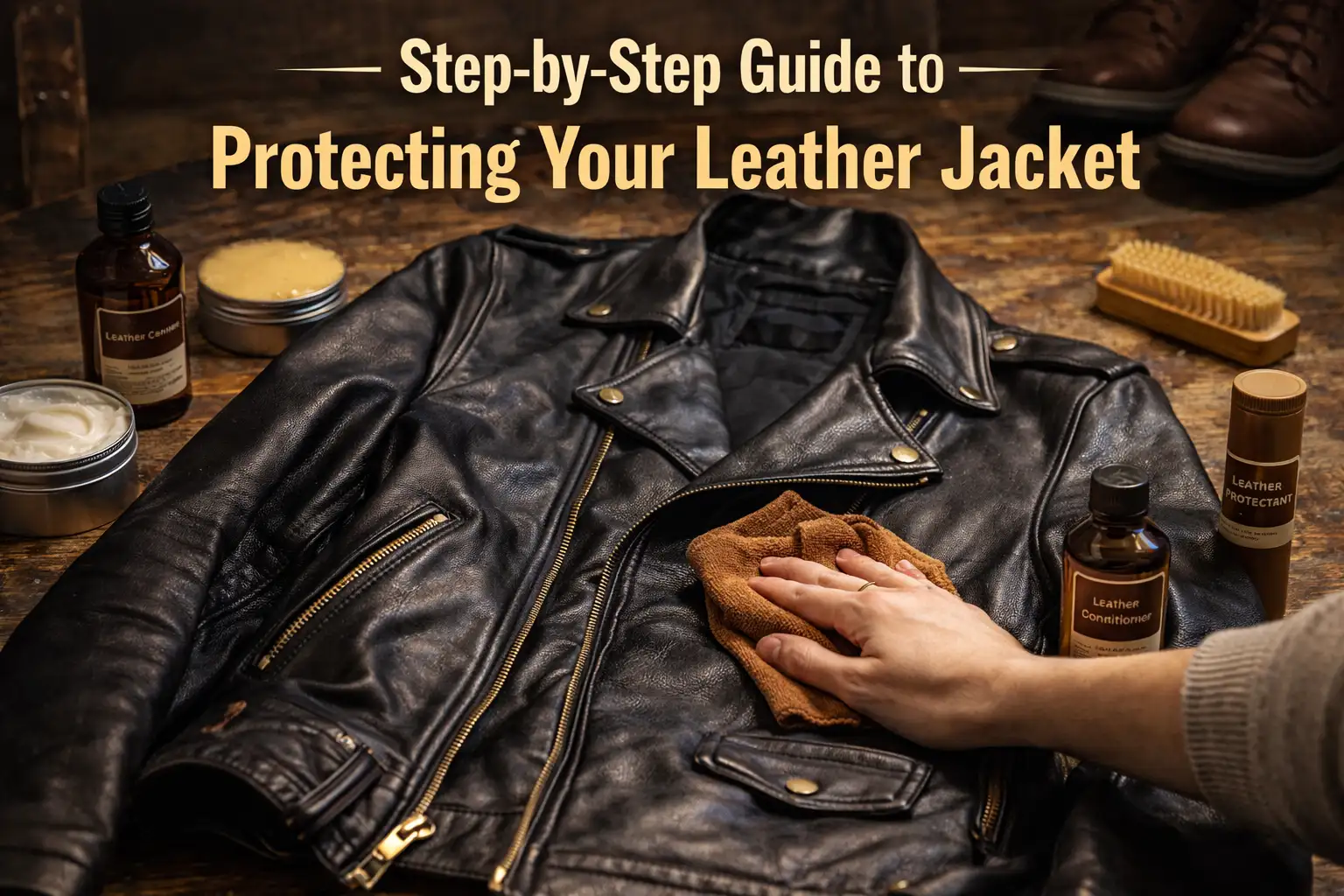

Step-by-Step Guide to Protecting Your Leather Jacket
A high-quality leather jacket isn’t just a piece of clothing; it’s an investment, a companion for the road, and a style statement that if treated right will actually look better ten years from now than it does today. However, the very thing that makes leather so desirable its organic, porous nature is also what makes it vulnerable to the elements.
At Americans Clothing, we believe that buying a jacket is only the first half of the journey. The second half is the ritual of care. Whether you’ve just unboxed a fresh cowhide biker jacket or you’re looking to revive a vintage lambskin bomber, this guide will walk you through everything you need to know about shielding your leather from the world.
Understanding Your Leather: The First Step in Protection
Before you grab a cloth, you need to know what you’re working with. Not all leather is created equal, and protecting a suede jacket looks very different from protecting a heavy-duty grained leather.
Phase 1: The Pre-Protection Cleanse
You wouldn’t wax a dirty car, and you shouldn’t protect a dirty jacket. Applying protector over dust or salt buildup simply seals the grime into the pores.
Phase 2: Conditioning – Feeding the Hide
Think of leather like your own skin. If it loses moisture, it loses elasticity and begins to flake or crack. Conditioning is the process of reintroducing fats and oils into the fibers.
How to Condition:
Phase 3: The Shield Waterproofing and UV Protection
Once the leather is clean and nourished, it’s time to apply the “armor.” This is crucial for residents of damp climates or those who spend a lot of time outdoors.
Water Repellents
There are two main types of water protection:
UV Protection
Sunlight is a slow-moving hazard for leather. Those UV rays constantly bleach the rich color and sap moisture from the fibers, leaving them brittle. If you’re out often this summer, use a protector with UV inhibitors. It keeps your jacket supple and the color as deep as the day you bought it.
Leather Care vs. Suede Care: The Key Differences
It’s easy to get confused, but using the wrong product can ruin a jacket instantly.
| Feature | Smooth Leather | Suede/Nubuck |
| Cleaning | Damp cloth & leather soap | Suede brush & eraser |
| Moisturizing | Leather creams & balms | Avoid (use specialized suede revivers) |
| Water Protection | Waxes or sprays | Aerosol sprays only |
| Recovery | Buffing with a cloth | Brushing to lift the nap |
The Golden Rules of Storage
Protection isn’t just about what you put on the jacket; it’s about where you put the jacket when you aren’t wearing it.
Dealing with The Elements Emergency Tips
Even with the best protection, accidents happen. Here is how to handle them:
Frequently Asked Questions (FAQs)
How often should I protect my jacket?
Generally, a deep conditioning and waterproofing treatment should be done every 6 to 12 months. However, if you live in a very dry or very rainy climate, you might want to do it once a season.
Will protecting my jacket change its color?
Most high-quality conditioners will slightly darken the leather temporarily. This is why testing on a hidden spot is vital. Over time, the leather will return to its near-original shade as the product absorbs.
Can I use mink oil on my fashion jacket?
Mink oil is excellent for waterproofing, but it is notorious for significantly darkening leather and making it very soft. We recommend it for work boots or heavy outdoor gear rather than a tailored fashion jacket from Americans Clothing.
What do I do if I see mold on my leather?
Wipe it away with a mixture of mild soap and water (or a specialized leather antimicrobial). Ensure the jacket is completely dry and then move it to a location with better airflow and lower humidity.
Is Genuine Leather easier to protect?
Actually Genuine Leather is a lower grade that is often heavily processed. Because it has a corrected surface, it might not absorb conditioners as well as Full-Grain leather, but it still requires a surface protector to prevent the finish from peeling.
Final Thoughts: The Americans Clothing Philosophy
A leather jacket is a story in the making. Every crease and fade tells a tale of where you’ve been. By following this guide, you aren’t just cleaning a garment; you are preserving a legacy. Take the time to treat the material with respect, and your Americans Clothing jacket will remain a staple of your wardrobe for decades to come.
Remember: Clean, Condition, Protect, and Store. Master these four pillars, and you’ll never have to worry about your leather losing its luster.





Leave a comment